This week, we learned about focus and why that is important when we’re writing narratives. When teaching students how to write personal narratives, it’s important that we are teaching students how to focus in and write about small moments. For so many kids, it’s hard to dive into detail and to use their senses to describe their small moment. For students, we’re going to work on finding things to write about and how we can take those writing territories and narrow them down to small moments that can become personal narratives.
I looked at the “Finding the Point of Your Story” lesson from “Mentor Texts” to guide my narrative. Personally, I was trying to do this with one book, so I didn’t get to do this fully, but I enjoyed the strategy because I got to look at the experiences Piggie and Elephant from “A Big Guy Took My Ball” and see how they related to my experiences and how I could use them as ideas to spark my own writing. I have attached a copy of a draft of the lesson we wrote and a draft of my writing.
Your Turn Lesson 1 https://docs.google.com/document/d/1TvYvWU0vfk5MMv9U8f75292IFxwRSkfmy3ZDeaMJl_I/edit?usp=sharing
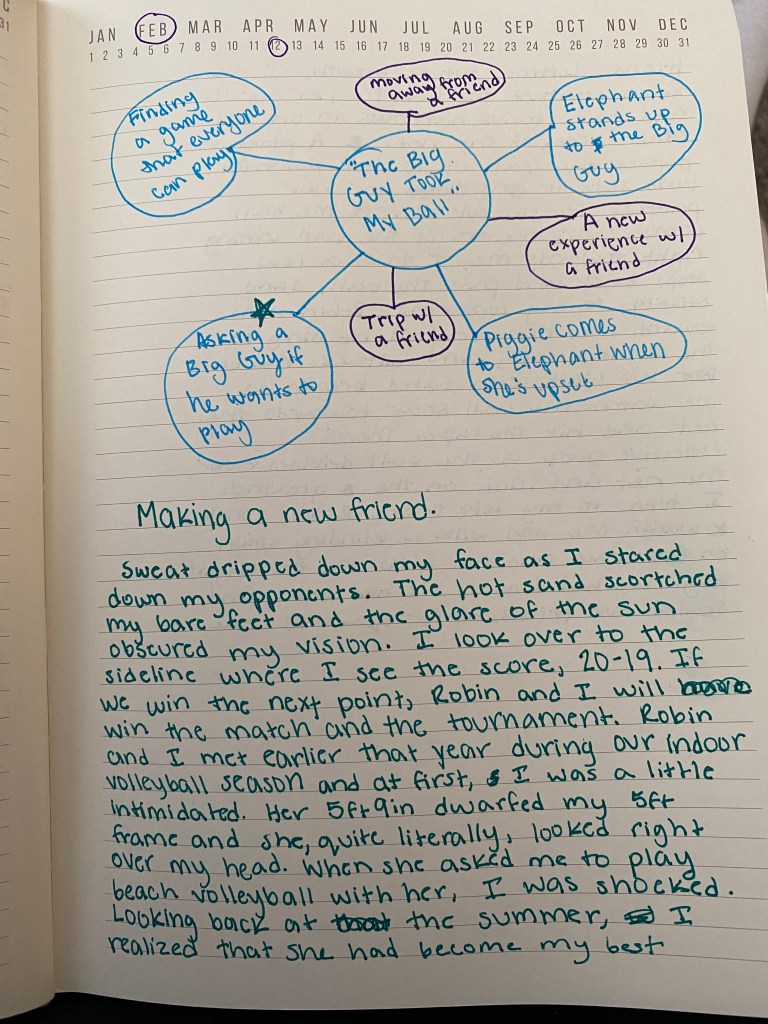
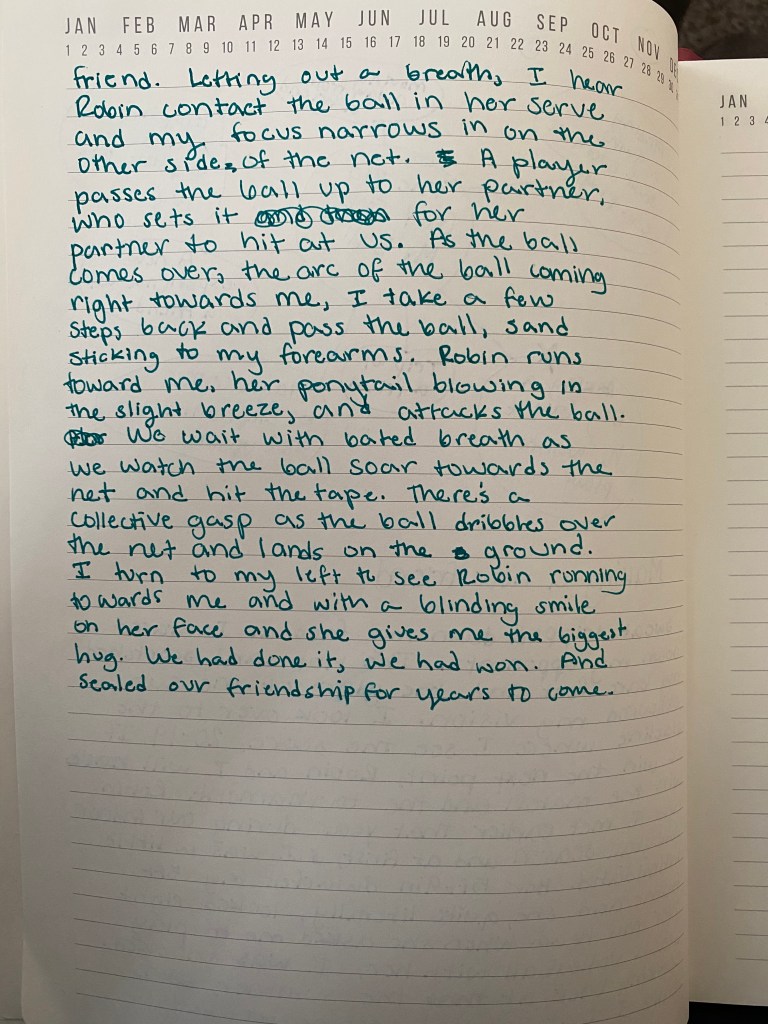
Looking at my work, I know that it isn’t my strongest work, but I think that our students will face that too. It was really easy for me to become discouraged that my writing wasn’t coming out the way that I had wanted it to and as teachers, we need to be prepared for when our students will go through phases like this. Part of what I told myself was that I just needed to get something on paper. It didn’t have to be any particular length and it didn’t have to be perfect, but I needed to get something out. With that thought process, I churned out this incredibly rough draft of a personal narrative, using the strategy from “Mentor Texts”.
This week, we also read “Happy Like Soccer”, which was a beautiful narrative story and one that I think that so many kids will be able to relate to. It doesn’t narrow into a “small moment” in the typical definition, but it does relay an experience and a full story of feelings within it. Emotion is so important when writing a narrative and I think that is what the students will get the most of out of this “mentor text”. The range of emotions that both our protagonist and her aunt go through during the book help the story become relatable and can show students (in a more explicit way), how emotions can help move stories forward. And that all stories have emotion because we, as humans, have emotions and they are a part of what makes a story entertaining. And any experience a child has that causes them to feel different things can become a story, as was shown in the “Why Narrative Writing Matters” article. Not every child will have some wild, exciting experience to write about, but every child has a story to tell and having students tap into the emotions of a moment helps them to relay that story to the fullest extent possible.
After looking at my small moment narrative, I think I will probably rewrite it about something different because I don’t think that this will be the best thing to write about for me. And I think that students will go through this too, so modeling that process for them is important as well.
We also talk a lot about writing territories, which are different areas that we have that we could write about. The writing territory that we are exploring in this practice is friendship and different aspects of friendships. Students can pick out different experiences that they can write about in regards to their own friendships. It’s important to show them that we can all read the same thing, but that there are so many ideas that can come from it. And even if we’re writing about something like “making a new friend”, what the students will come up with will be a wide range.
 Ms. Colleen's Writing Site