This blog was nearly impossible to title, as I felt like I had so many different things I wanted to cover in very little time. I suppose I’ll do this in sections then.
Six-Word Memoirs
I have been familiar with six-word memoirs for a while. Admittedly, I don’t necessarily remember when I first read Ernest Hemingway’s famous six-word story “For Sale: baby shoes, never worn”. Nevertheless, I have always found it so powerful, because of the power that each individual word has to hold. When working on narrative writing with students, six-word memoirs can be a great activity to learn how to be descriptive and intentional with what they write. When thinking about what my six-word memoir would be, I had to think really hard about what mine might be. I went through a couple of different drafts before I landed on what I thought was the best representation of me in six words. This is what I landed on:
Leg shakes, eyes wonder, mind drifts.
Colleen McIndoe (aka ME!)
I decided on this because lately, my ability to stay focused has been something I have struggled with. When I thought about what I have experienced lately and my experience writing this memoir, this is what I came to. I think when we work with students, we can use activities like this to show students that sometimes we have trouble doing things as well and that we can use things that we struggle with to inspire our writing.
You-Do Lesson/Adding on to my Personal Narrative
https://docs.google.com/document/d/1eRNXi0DPbY7lTmxOtqi8Z3zPI4737nQeBmhbBkkHrVs/edit?usp=sharing
Linked above is our You-Do lesson.
When I was looking at my original small moment narrative, I decided that I wasn’t a huge fan of it, so I decided to restart it entirely. When I rewrote it, I decided to look at the lessons from Chapter 4 of “Mentor Texts” and for my narrative in particular, I thought that the “Building Content Through Showing, Not Telling” was a natural fit. In my original version of the narrative, I used quite a bit of telling because there was explanation that was necessary to build up the background of why the narrative is important to me. I thought that adding more descriptive elements would not only assist me in adding additional detail, but that it would also allow me to lengthen what I already had. So I started with this as my first draft:
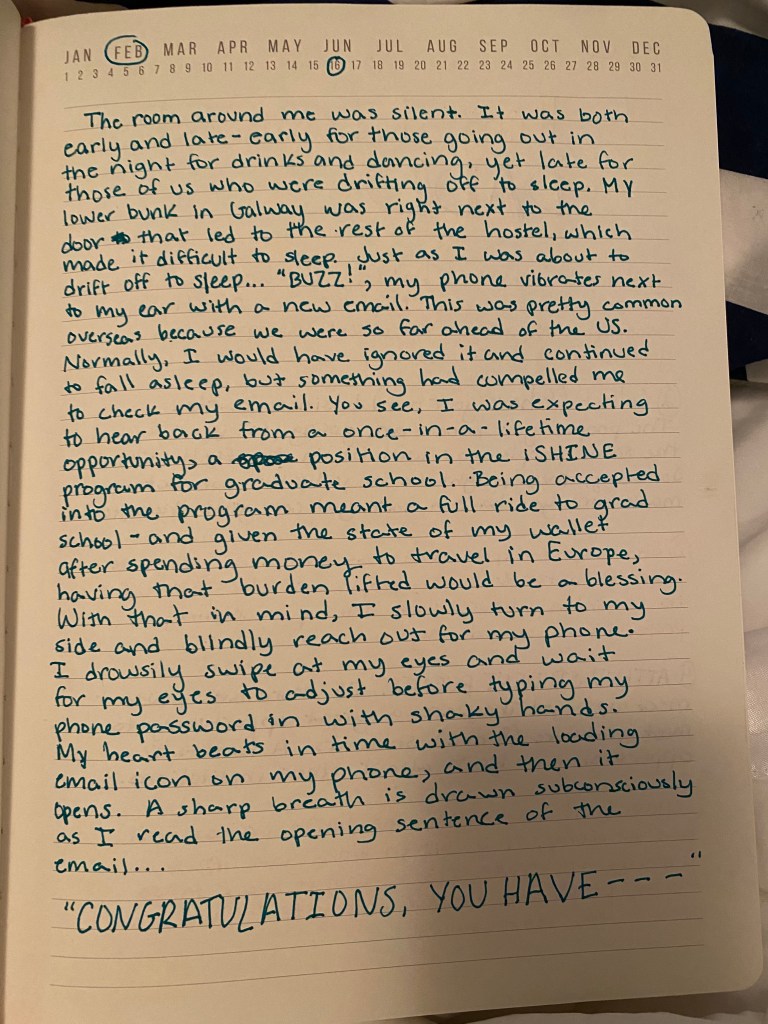
This is what I got from my second draft that focuses on Showing, Not Telling:
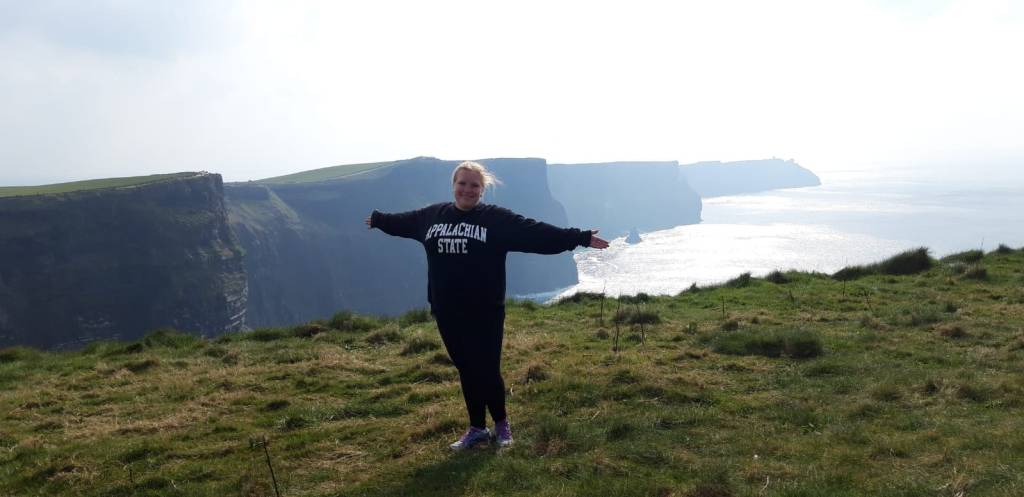
Silence enveloped the room, as bodies filed in and out of the door to the lobby. It was both early and late- early for those headed out to see the nightlife in Galway and late for those who were retiring after a long day of exploring the city. I found myself in the latter, having spent the day traveling the emerald green coasts of Ireland, leading to the spectacular view from the Cliffs of Moher. Freshly showered and half asleep on the bottom bunk, the only light that illuminated the room was the strip of light from the bottom of the bathroom door, at least that was the case until… “BUZZZZ”, my phone laying next to my head vibrated to life and lit up the inside of my eyelids. Normally, I would ignore it, put my phone on Nighttime mode and continue falling asleep. However, In my semi-conscious state, I remembered that I was waiting to hear from Appalachian regarding my application for the iSHINE program, which would provide me with a full scholarship to graduate school and an opportunity to participate in research in something that I was really excited for. Bleary eyed, I reach around for my phone and my heart thumps out of my chest as I open up my email to see an email that begins “CONGRATULATIONS- You have been chosen…”. A small squeak escapes my throat as I run out the door barefoot to call my parents, nevermind the fact that the floors were disgusting. After a brief conversation with my parents, I go back to get in my room and I am met with a locked door. In my excitement, I had managed to forget my room key, which would allow me to get back into the dorm because the doors automatically lock when they close. After a few tries opening the door and knocking a few times, I walk out to the help desk, a little closer to the ground after floating on Cloud 9, and sheepishly request to be let back into my room. A shiver travels down my spine at the cool air next to the front door, my shorts and t-shirt doing little to block out the breeze that escaped between the gaps of the sliding doors.
Mentor Texts
I continue to look towards mentor texts that I have experienced in my life that have helped me to become the writer that I am today. Everything in class has caused me to start wondering what I would consider my “mentor texts” to be when I’m writing and I’m struggling to find even a short-list of authors I aspire to write like. Recently, Amy Krouse Rosenthal (her humor and attitude is something I someday want to embody) has become one of my all time favorites, but I have struggled to think of others and that’s when I figured something out. When I was younger, I read a lot and would read pretty much anything I could get my hands on. The problem is that there are very few books from that formative period that stood out individually to me, so what I have come to discover is that my writing is a product of everything that I’ve read and that the things that I read today shape how I write tomorrow. Right now, I have “Thinking in Pictures” by Temple Grandin in mind while I wrote. I enjoy her writing immensely and is incredibly informative.
In Calkin’s “Revising Leads”, I loved how she had the example of how a student wrote before and after having read books from their classroom library. Reading is such a powerful tool when developing writers. If young writers don’t read works from good authors, it’s hard for them to improve, because they don’t know what really good writing looks like. We have to be very intentional when introducing students to new books and when providing them with good mentor texts that can help them to find their own voices.
Calkins L.M. (2006) A guide to the writing workshop, grades 3-5. Portsmouth, NH: Heinemann
Dorfman, L. R., Cappelli, R., & Hoyt, L. (2017). Mentor texts: teaching writing through childrens literature, k-6(Vol. 2). Portland, ME: Stenhouse Publishers.
Rosenthal, A. K. (2016). Textbook Amy Krouse Rosenthal. Penguin Group USA.
 Ms. Colleen's Writing Site