I love poetry. When I was younger, I would write poetry every day at recess, trying and revising each poem until I thought it was perfect. Although I don’t do it often anymore, writing and reading poetry is something that I enjoy immensely. I didn’t do as much of it in high school because the only time that I really interacted with poetry was when I was analyzing it for a test. As a teacher, it is important to me that I can introduce poetry into my classroom. However, as a special education teacher, I know that introducing it in the traditional way is something that may or may not have the desired impact, so making sure that the introduction is something meaningful to the students is important.
It was actually from Dr. Koppenhaver’s class, but one good way to introduce poetry to students who may have difficulty with conceptualizing what poetry is and what is involved in writing it. One way that he suggested is by using observational poetry, by providing the students with an object or place or experience that they can write about in that moment and then using their senses to describe what they’re experiencing. I have never actually taught poetry before, so I wouldn’t say that I am comfortable at all with teaching it.
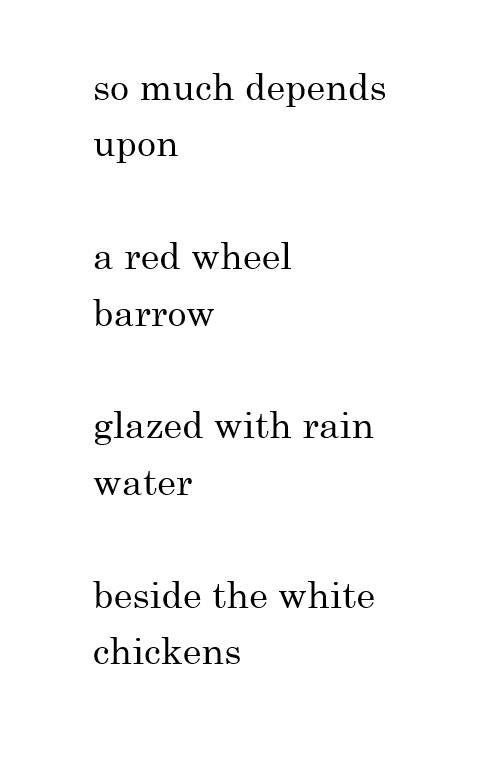
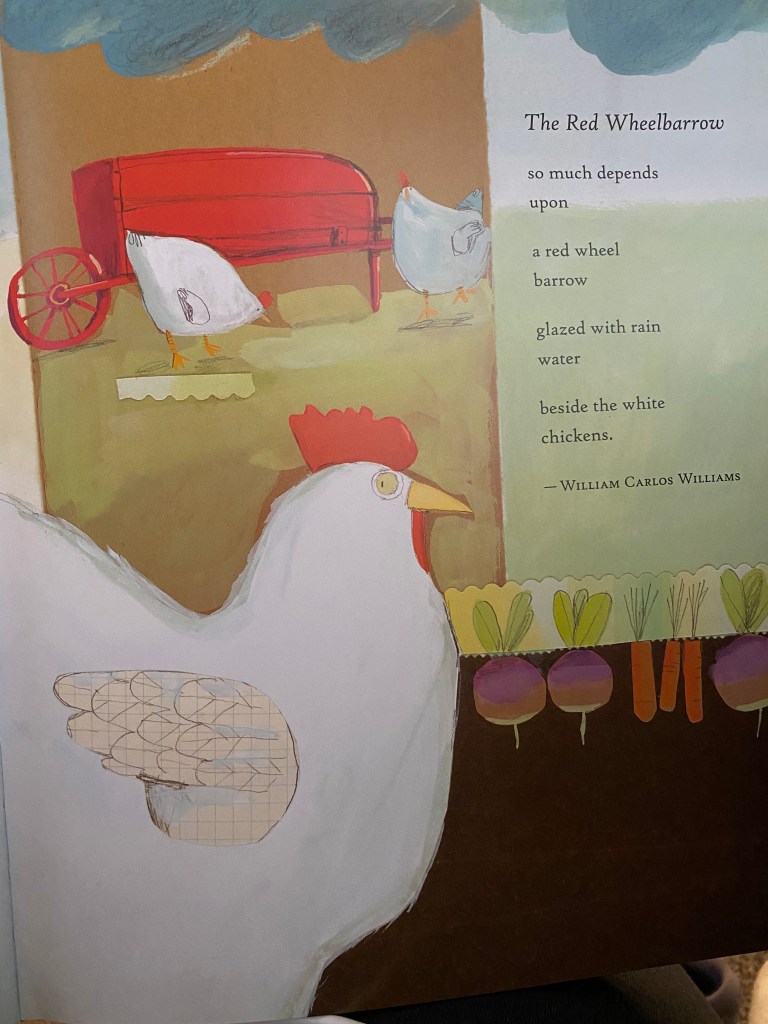
For me, there isn’t necessarily a specific set of criteria that lets me know that a poem is a good one. In my opinion, if a poem is able to elicit emotion and make the reader feel something, then the poem is successful. A truly exceptional poem is one that I keep coming back to, one that I purposely save and want to look at over and over again. One example of that for me is “The Red Wheelbarrow” by William Carlos Williams. At first glance, this poem, in no way, should be one that should be considered with any type of regard. Without any context, it almost seems like a kid who didn’t want to write their poetry assignment. However, upon deeper research, you find that the meaning of the poem isn’t what meets the eye. It is such a stark contrast from what poetry is traditionally, and initially, I believed it to be a satirical poem. In actuality, it is rumored that Williams, who was a doctor, looked outside a patient’s window and saw this scene, and something about it moved him. The imagery is so simplistic that everyone who reads it has their own vision of what this wheelbarrow looks like. What I love most about it is that it shows that poetry doesn’t need to be complex in order to make a poem meaningful.
I think that the best way to create a “poetry” environment in my classroom is to just have poetry available for students to read and to regularly model how to write different types of poems during writing time. From a young age, we want to make sure that poetry isn’t seen as something super complicated and intimidating, but just another form of writing that is a part of what we do in our class.
After Readings
Well, the first thing that stood out to me was something quite serendipitous….
My favorite poem! What I loved about both “Firefly July” with poems selected by Paul B. Janeczko and “All the Small Poems” written by Valerie Worth is that they both highlight poems that are short and simple. And not in a bad way, but in an attainable way, one that makes sense to a lot of people. You can read into the poems as little or as much as you want to. For students who are inexperienced in poetry, it’s so important to put them in poetry that is easy for them to access. The one thing that then stood out to me in “Awakening the Heart” are the three layers of reading poetry:
- Choose poems to read that are immediately accessible, nonthreatening, and relevant to students’ lives- encourage reading projects that will invite all students into the world of poetry.
- Help students connect personally to a poem by guiding them toward finding themselves and their lives inside a poem.
- Guide a student towards analyzing the craft of a poem, figuring out how a poem in built, interpreting what a poem means, or unlocking the puzzle of a difficult poem
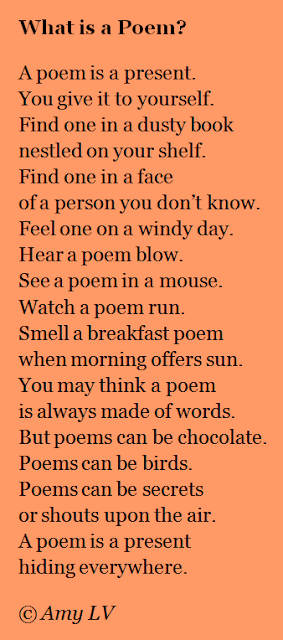
When I think about introducing poetry to students, my first thought is the accessibility because for so many young students, poetry can be entirely inaccessible. As I stated above, the poems featured in “Firefly July” and “All the Small Poems” are super accessible for kids of any age. Another great resource is Amy Krouse Rosenthal’s Poetry Farm, which I’ll link below. It’s where I found the poem at the top of the page and it is absolutely AMAZING. I love the fact that you can search by subject of the poem, which makes it a really neat tool if you’re trying to find a certain poem that might hit on a certain kid’s interests. For example, if some kids are really into science, she has a whole section on just science poems. It also allows you to find really specific mentor poems. If you’re focusing on one type/structure of a poem, you can search for that or if you want to focus on a certain aspect of poems, like emotion, you can find a list of poems that exhibit that trait. All of her poems (from what I have been through so far) are fairly accessible both in language and in content, so as a teacher, it can become an extremely useful tool.
Heard, Georgia. Awakening the Heart: Exploring Poetry in Elementary and Middle School. Heinemann, 1999.
Janeczko, Paul B. Firefly July: a Year of Very Short Poems. CANDLEWICK Press, 2018.
Worth, Valerie, and Natalie Babbitt. All the Small Poems. Farrar, Strauss and Giroux, 1991.
LV, Amy. “The Poem Farm.” The Poem Farm, 1 Jan. 1970, http://www.poemfarm.amylv.com/.
 Ms. Colleen's Writing Site